History of Arts
The Valley of Kashmir and the City of Srinagar had a major role for the trade on the Silk Road leading towards Central, South Asia and the Middle East. The famous Sufi Saint of Persia, Hazrat Mir Syed Ali Hamdani, 1341–1385, who came to enlighten Kashmir with his spiritual guidance, brought along highly skilled artisans down into the valley. The Kashmiri Spirit was always alive in interactions in various forms of religion, region and nation.
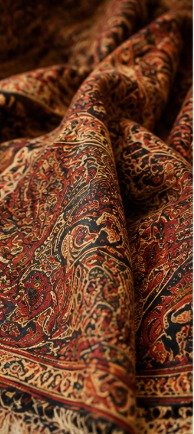
The ‘Sri Pratap Singh’ Museum in Srinagar exhibits a pale blue shawl, with a map of Srinagar embroidered in various colors on it. The shawl was once commissioned by Maharaja Ranbir Singh and later given as a present to the Prince of Wales during his visit to Kashmir. The Mughal Emperor Akbar was also fascinated by the Kashmiri Shawls and the way it was worn. The Kashmiri Shawl was and still is one of the most important material representations of Kashmir to the outer world including Europe and America.
The word ‘shawl’ is derived from shal, Persian name for a variety of fine woollen garments. The origin of the Shawl Industry dates back to the 15th century and achieved its prime time during the Mughal Period 1587–1758. The Kashmiri Shawl was the universal symbol of aristocracy across the Indo-Persian world. Miniature paintings and portraits show the Emperors wearing robes and gowns made with the original Kashmiri craftsmanship.
It was one of Napoleon’s former generals, Allard, employed in Ranjit Singh’s army in 1822, who established a direct link between Pashmina Shawl manufacturers and those living in Kashmir. Napoleon’s wife Josephine was so fascinated by the beautiful shawls that she set a new fashion trend in Paris which spread throughout Europe.
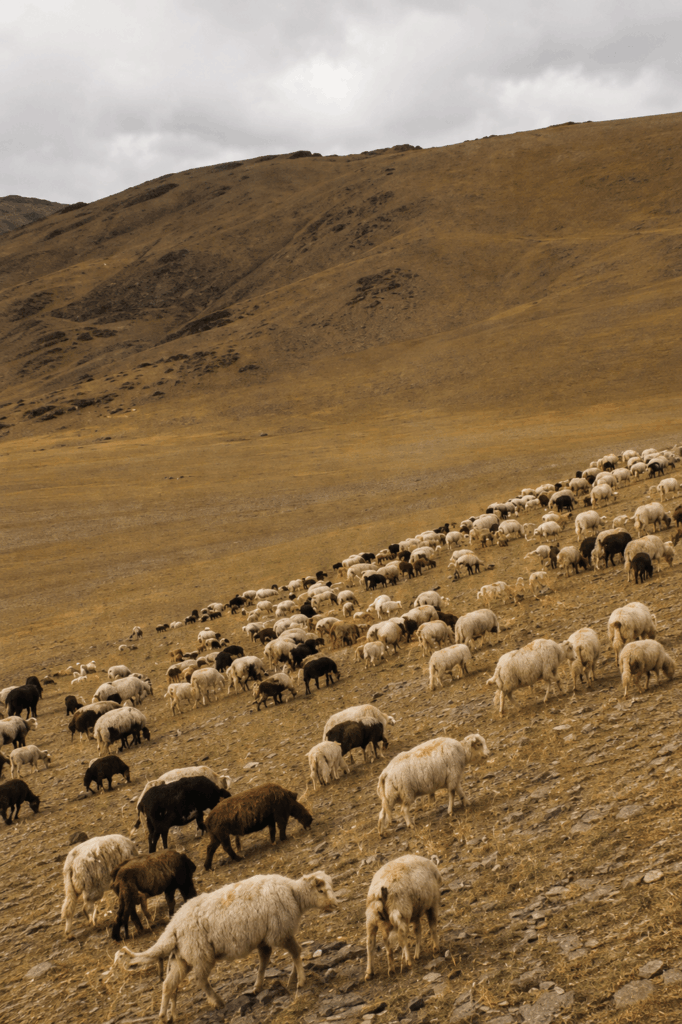
Shawl merchants, on the other hand, were a powerful class in the City of Srinagar and in the Valley of Kashmir. Traditionally Pashmina is the Persian word for pashm, and Pashmina has been used to describe the traditional Shawl or Stole which is draped over the shoulder, whereas in Europe the word Cashmere described this fine fibre.
A long process from selling the pashm, the raw material for the shawls, by the weavers in the market, its dying to its working a pattern on it, took each shawl months to complete. The Kashmiri families, the weavers and the traders inherited their art from their ancestors and the tradition of this art continues from one generation to the next.
Most travelers visited the houses of the “Merchant Princes of Kashmir” not only to get a shawl but also to get a taste of the Kashmiri superior mode of living.
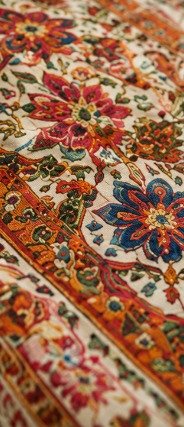
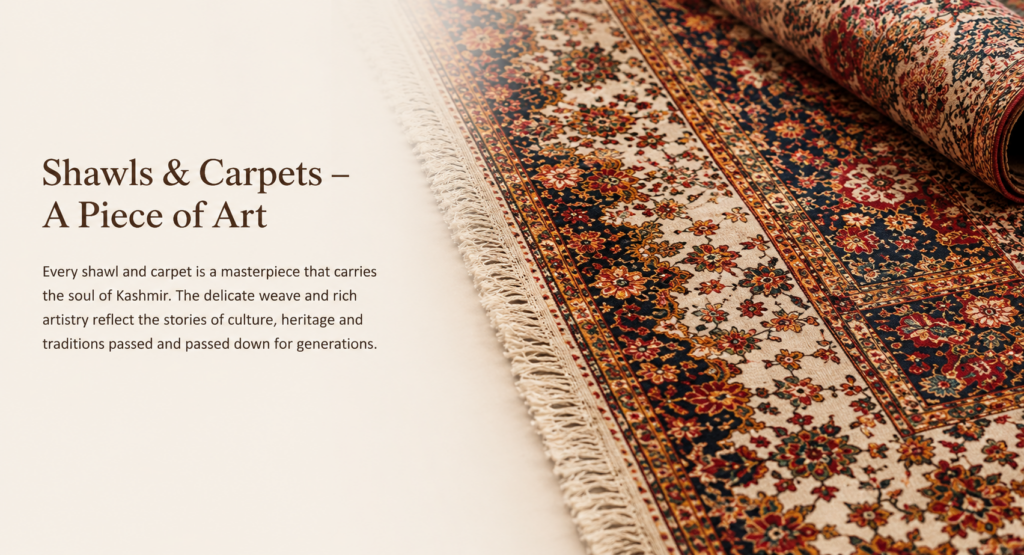
The Shawls and the Kashmiri Carpets, both stand for ingenious perfection and are pieces of art. Kashmiri hand-manufactured Shawls and Carpets can be appreciated in terms of material, technique, ornament and imagery as illustrated by stylistic characteristics of different periods and cultures. The elements of the design mean some hundreds and thousands of hours of skilled work. They are like music, notes and melody or words in a poem representing the beauty of imagination.